For photographers
Where Did My Sunday Go? The Hidden Job After Every Wedding
Snapseek · · 3 min read

It's Sunday, 11 a.m. Arjun has been awake since seven. The Sharma wedding ended on Thursday, and he should be resting.
Instead he's on his laptop, making a folder called "Bride side FINAL (2)". His phone buzzes. It's the groom's mausi: "Beta, can you send the varmala photos? The link is not opening."
The job nobody puts on the quote
Arjun quoted the Sharmas for shooting. He planned days for editing. Both of those are real work, and he got paid for both.
But there's a third job hiding after every wedding. Getting the photos to people. The couple, the parents, and three hundred guests who all want "the pics".
He never quoted for that job. Nobody does. It just shows up, one message at a time.
A week inside Arjun's phone
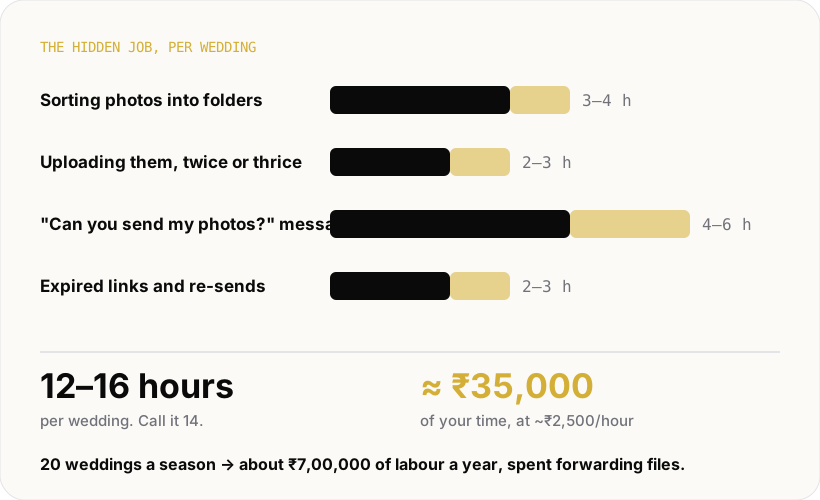
Monday. He splits the edited photos into folders. Bride's side, groom's side, family only, a small set the couple can post first. Renaming, re-exporting. Three hours gone.
Tuesday. He uploads to Google Drive for the couple. Then a smaller batch for the family WhatsApp group, because the Drive link "needs permission" on someone's phone. Then a pen drive for the uncle who wants everything. Another two and a half hours.
Wednesday to Saturday. The requests arrive. "My cousin wore a green saree, do you have her photos?" "The link expired." "Please send again to my mother's number." Each one takes five minutes. There are dozens. Most arrive while he's shooting someone else's haldi.
Sunday. Fixes. A guest downloaded forty photos and lost them. The couple wants "everything again, in one place, for the album".
Add it up and it lands between 12 and 16 hours per wedding. Call it 14.
What those hours are worth
Say Arjun charges ₹1,50,000 for a two-day wedding and spends about 60 hours shooting and editing. That values his time at around ₹2,500 an hour.
Fourteen hours of sending files, at that rate, is about ₹35,000. Given away quietly, on every single wedding.
The strange part? Arjun never felt it as work. It leaked out in ten-minute pieces, at breakfast, at traffic lights, at midnight. It never made it into his price. It only made it into his tiredness.
And the family didn't feel it as effort either. To them, it just felt slow.
When the green saree cousin finds herself
Now picture the next wedding a little differently.
Arjun's photos go up during the event. A QR code sits on every table. Guests scan it, take one selfie, and see only the photos they're in, right there in their phone browser.
The green saree cousin finds her own photos. So does mausi. The couple has one link for the whole event, with full-quality downloads, so nobody asks for "the original" after WhatsApp blurs it. (That blur has its own sad story: the day the best photo came back as a blurry forward.)
Arjun still picks the photos. He still decides what goes up. He just stops being a courier. Those fourteen hours shrink to a couple.
The chore that turned into a treat
Here's the shift that surprises most photographers. Once guests are finding their photos at the venue, delivery stops being the boring part. It becomes the part people talk about.
Families love it. Guests show each other their photos over dinner. And the photographer's name travels with every picture. Some photographers even add it to their package as its own line, because clients happily pay for it. (If your camera can't send photos by itself, here's how to share live with any camera.)
Getting Sunday back
Next Sunday, Arjun's phone buzzes again. It's mausi. But this time the message says: "Found all my photos! So beautiful, thank you beta."
He smiles, puts the phone down, and goes back to sleep.
Snapseek is one way to hand that hidden job to the guests themselves, and get your Sundays back.